Showing posts with label English / Literature. Show all posts

October 30, 2008

Poet Idris Anderson

Classical 89 Thinking Aloud: http://www.classical89.org/thinkingaloud/past.asp?d=10/27/2008 Idris Anderson is the 2008 recipient of the May Swenson Poetry Award, a significant national award for poetry in the English language. Her publisher describes her poetic voice as having little interest in ideology, but great concern for lived experience in all its richness. Eminent literary critic Harold Bloom says Anderson's "grave, measured poetic voice" won him over instantly. Anderson visited BYU last week and stopped by to talk to us on Thinking Aloud.


September 5, 2008

Are We There Yet?

Classical 89 Thinking Aloud Interview: http://www.classical89.org/thinkingaloud/past.asp?d=8/21/2008
BYU professor Susan Rugh has a new book about the golden age of American family vacations - a time of open roads, new cars, cheap gas, and countless destinations. More Americans were seeing more of America. Unfortunately, not everyone was welcome on the road. Rugh also reveals a harsh underside of the vacation at this time, when African Americans were denied food, lodging, and even access to restrooms. The title of the book is Are We There Yet?

August 5, 2008

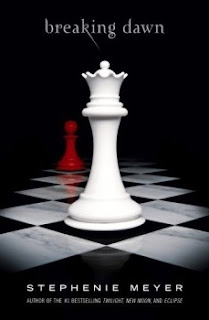
Breaking Dawn

A stay-at-home-mom of three boys Stephenie Meyer found herself writing after a dream she had. When she sat down at her computer and began, she found that she couldn’t stop. The piece she created, which centered on her dream, became Twilight, a novel. In an era of Harry Potter and the immediate success of writers willing to bring their readers into mystical and magical worlds, Twilight was immediately successful. Written for young girls, it became popular with all people- and thus began the craze. The story centered on protagonist Bella, a high school student who moves to the sleepy Pacific Northwest town of Forks, Washington. Shortly into the book Meyer introduces Edward, who becomes Bella’s love, and oh- he also happens to be a vampire. Meyer twists and weaves the plot into a series of dramatic and gripping events. It is almost impossible not be entranced by the world and romance of the characters she creates. Two books later in the series, the saga continued. Unlike many sequels, New Moon and Eclipse, the second and third books in the series, drew more readers into the lives of Bella, Edward, Jacob, and the host of other characters. Why these books have created such a strong response, and gained readers around the globe can perhaps be found in the careful and well-weaved stories that ensues.
For students at Brigham Young University the books hold special meaning. Stephenie Meyer graduated from BYU and her books are sold not only at the student bookstore in the Wilkinson Center, but also at Deseret Book, a Latter-day Saint book store. When the news broke that Meyer was working on a fourth book in the series, and the last in the saga to be written by the point of view of Bella, fans scrambled to pre-order, and wait in anticipation. Breaking Dawn, was thrust into even more of a spotlight when it became know that a Twilight Movie would be coming out into theaters December 2008. Many die hard fans re-read the first three books waiting for Breaking Dawn, while following website and blog posts about movie updates.
On Saturday August 2nd at 12:02 am the first copies of Breaking Dawn went on sale. The Brigham Young University celebrated by holding, ironically and comically, a blood drive as well as a party in the student bookstore. Copies could be found at bookstores everywhere, and fans flocked to pick up multiple copies. Hosting a series of concerts and celebrations including one in Times’ Square, Meyer and fans celebrated the debut of the fourth book. While the movie is still in the works, and a book written by the point of view of Edward is due to be released in the future, Twilight fans are satisfied for the time being.

-Katherine Harris

Feminazis or Ardent Advocates?

Classical 89 Thinking Aloud Interview: http://www.classical89.org/thinkingaloud/past.asp?d=7/30/2008
When tracing the genealogy of human rights activism, it’s hard to know precisely where to begin. But in the English speaking world, the lineage of human rights as it relates to women can almost certainly be traced back to one Mary Wollstonecraft today. We’ll examine a tradition of rhetorical prowess, from Wollstonecraft to Virginia Woolf.

July 28, 2008

Emigrant Nation

Classical 89 Thinking Aloud Interview: http://www.classical89.org/thinkingaloud/past.asp?d=7/25/2008 Thirteen million Italians didn’t “get the boot” but “left the boot” between 1880 and 1915. The story of this massive emigration is epic by reason of sheer scale. But it’s also a quirky story, for a very curious reason. If you were an Italian emigrant, your country let you go, but at the same time held onto you. By calculated strategy, Italy became more idea than just place. Scholar Mark Choate traces the intentions and politics that pursued these travelers in his new book, Emigrant Nation: The Making of Italy Abroad. That’s the premise of our story, with historian Mark Choate, on our Thinking Aloud.

July 14, 2008

Utah Shakepearean Festival


Classical 89 Thinking Aloud Interviews:
http://www.classical89.org/thinkingaloud/past.asp?d=6/19/2008
http://www.classical89.org/thinkingaloud/past.asp?d=6/26/2008
What is life without a little play? Without the laughter of an uproarious comedy, the thoughtfulness of a great drama, the melodies of a classic musical?
The curtain’s up on a new summer theatre season in Cedar City. In 2008, the Tony Award Winning Utah Shakespearean Festival features summer performances including Fiddler on the Roof, Cyrano de Bergerac, Othello, Two Gentlemen of Verona. I’ll introduce you to Two Gentlemen of Cedar City on our Thinking Aloud interview, to talk about the season.

Visit the Utah Shakespearean Festival : http://www.bard.org/

July 11, 2008

Literature in a Technological World


Most technology becomes irrelevant over time as someone introduces a new way to build a house, throw an arrow, play a game, or share music. In contrast, well-crafted literature, like Homer retold in his epic poem Odyssey, endures as a relevant part of the human experience for three millennia and longer. Technology merely makes life more comfortable and enjoyable and at times may even prolong days or years. The tools used to shape a life of comfort and ease, however, never give it meaning and purpose the way literature does. Literature is heartache, anger, blasphemy, exuberance, and despotism, but it is also passion, joy, worship, reverence, and freedom. It is built of the elements that celebrate life; literature is life. With each turn of a page, a reader loves, hates, dies, and is born again.

When I was ten-years-old, I languished in a German concentration camp with other unfortunate women through Corrie ten Boom’s The Hiding Place. Since then, I have faced life with greater determination and gusto than someone who merely dies a thousand deaths in a simulated game can ever appreciate. Although one might argue my suffering was merely vicarious, because ten Boom crafted a well-written story I came to appreciate the struggles of Corrie and her sister Betsie in a way that made those experiences a part of my own life. Even if characters are fictional, life implications are real. I endured slavery with Eliza in Stowe’s Uncle Tom’s Cabin as though I was confined with her because the fictional story captured actual human experience. Since then I have enjoyed a freedom that only those who have shared the tragedy of slavery can appreciate.

In today’s world of blinking lights and constant beeps from slim phones announcing themselves at inconvenient times, we are constantly reminded of the importance of technology to our daily existence. However, amidst the din of white noise as technology insists we give it attention, literature still has the power to take us far from the superficial world of longing, getting, and possessing, into a world of solitude exposing those quiet places in our soul to the things that make us most human. It is during these moments that literature accomplishes what technology never can. While technology may make our lives more comfortable, literature can make them uncomfortable in ways that transform us and give our existence greater meaning and purpose. Therefore, as we suffer at the hands of unscrupulous suitors with Penelope, feel the sting of condemning friends with Job, experience pathos as Hamlet faces unavoidable tragedy, or feel indignant about class prejudice with Eliza Doolittle, we experience life in a way that will never go out of fashion or become obsolete. This experience gives life meaning and purpose.

-Anna Staker

The Essential Themes of C.S. Lewis


Classical 89 Thinking Aloud Interview: http://www.classical89.org/thinkingaloud/past.asp?d=7/10/2008

Let's take a walk with C.S. Lewis through the back of a commonplace wardrobe. "A step further in –then two or three steps…" What do we find at the back of a wardrobe? The novels of C.S. Lewis guide us into worlds often laced with themes; our guides, Bruce Young and Steven Walker will lead us through these themes and positions of C.S. Lewis.

June 19, 2008

Beyond Words: Creative Journals


A Diary by A. Margaret Jefferies (1912-1992) This page: year 1951
Classical 89 Thinking Aloud Interview: http://www.classical89.org/thinkingaloud/past.asp?d=3/5/2008
Have you ever read some old journals or diaries? Maybe the journal of a grandparent or perhaps one that belonged to an ancestor. After reading pages of words, you might have wished the writings were accompanied by illustrations to give you a different view or further insight into some of the events that were happening in the life of your long deceased relative. We're talking about creative journals and diaries with BYU Philosophy professor, Travis Anderson. We're discussing going beyond words to enhance your journals.

June 16, 2008

Utah Poet Laureate Katharine Coles


Classical 89 Thinking Aloud Interview: http://www.classical89.org/thinkingaloud/past.asp?d=4/14/2008

In 1996, the Academy of American Poets named April National Poetry Month. Join us as we support poetry and all things poetic. We're talking with Utah's Poet Laureate Katharine Coles about poetry today, what live readings are all about, and her dogs.

June 13, 2008

Learning How to Look: Emerson

Listen to this Interview: http://www.classical89.org/thinkingaloud/past.asp?d=5/19/2008
Ralph Waldo Emerson is considered one of the greatest thinkers of the mid-19th Century. Dr. Carl Sederholm joins us to examine Emerson's major writings and then trace out his influence on selected writers, poets, and painters of the late 19th Century. Sederholm addresses two primary questions: (1) How does Emerson teach us to interpret literature, nature, art, and the world? (2) How were Emerson's writings transformed into artistic expression?

June 12, 2008

Shakespeare with Brandie Siegfried


We're discussing Shakespeare with BYU English professor Brandie Siegfried. Siegfried investigates not only our own views, but also historic perspectives about the locus of an experience we call Shakespeare.

Orality and Literacy


Listen to this Interview: http://www.classical89.org/thinkingaloud/past.asp?d=6/6/2008
Socrates once worried that writing would become a "burden to society." Over 2,000 years later, we're assessing his worry in the age of email, texting, and media. As the technological march brazenly continues forward, we'll stop to consider what we might be leaving behind.